Celebrating the return of four ancient artworks to Thailand.
We’re open Pride weekend! See our visitor tips …
We’re open Pride weekend! See our visitor tips …
All Articles
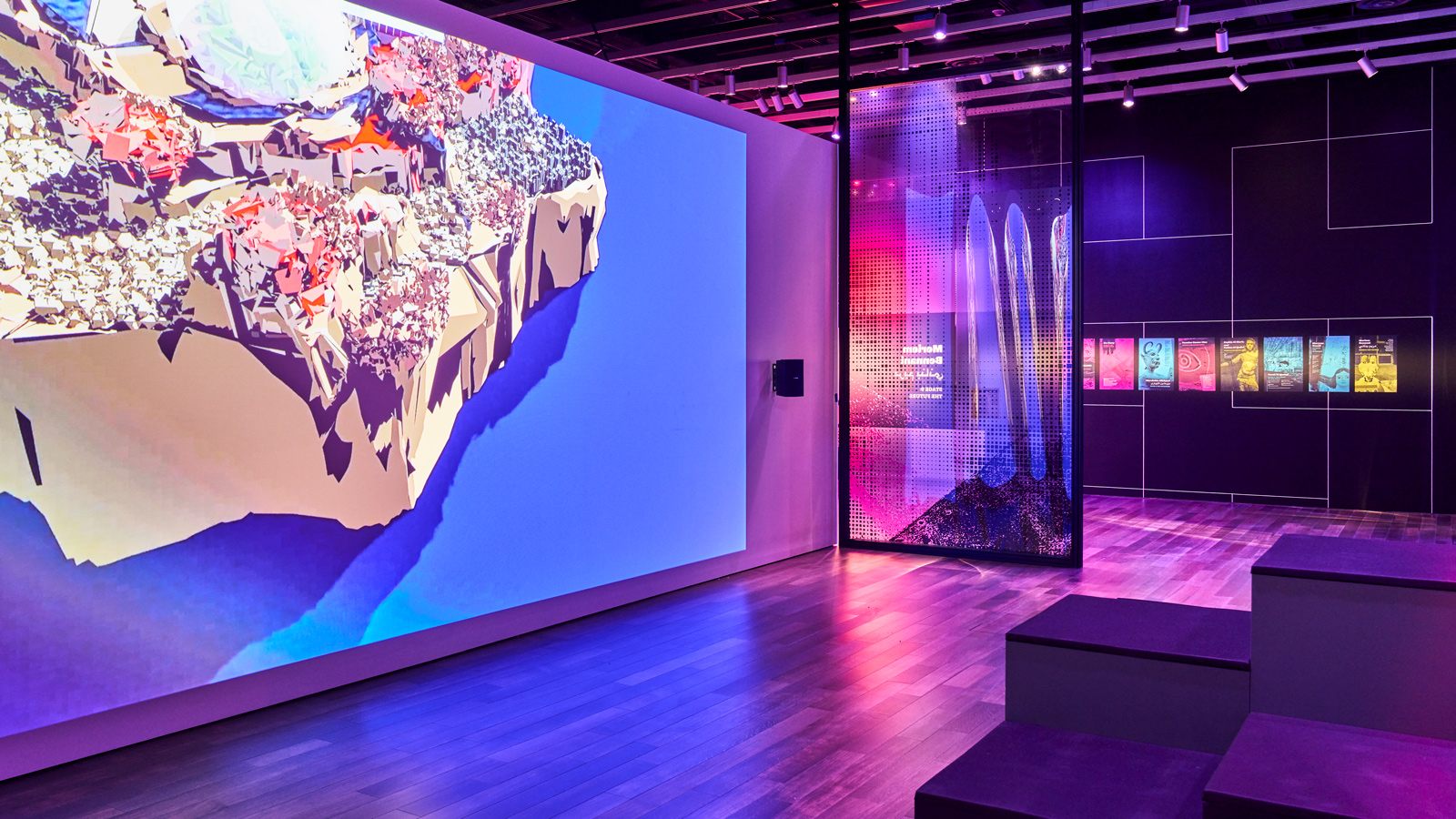
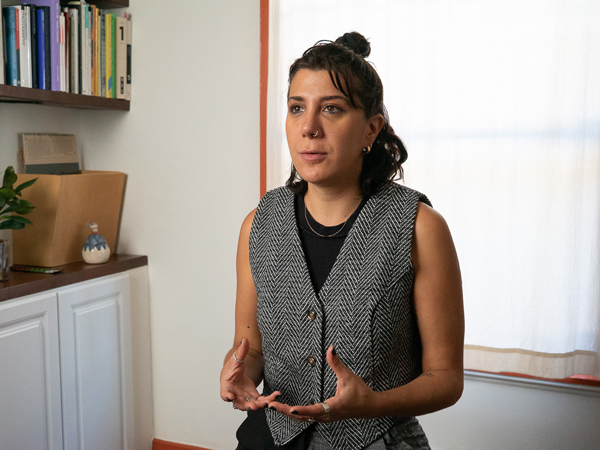
Curator Naz Cuguoğlu introduces Party on the CAPS, Meriem Bennani’s futuristic video installation.
It’s about connecting generations. A lot of my relationship to what I love about Moroccan culture comes from things I witnessed or overheard growing up, especially from elders. A certain kind of humor, a certain dirtiness or sexiness, a rawness in speech that excites me because it creates a space where I feel that anything is possible. Take, for example, song lyrics that depict with so much poetry and humor how sexuality informs everyday life, from politics to house chores. I’ve always been a sucker for that kind of thing, even as a child, seeing people talk with that kind of frankness and feeling like I can’t speak that way myself. Maybe the only way I can touch that, or re-create it, is through art.
— Meriem Bennani
It’s a climactic moment that’s based on clapping — accelerated, synchronized clapping. […] In that moment, the hierarchy vanishes in the synchronicity. I was thinking of it as an analogy for a way of living. […] The ritual feels like the most visceral embodiment of culture, something that can’t be stripped away or lost even after generations of diasporic living.
— Meriem Bennani
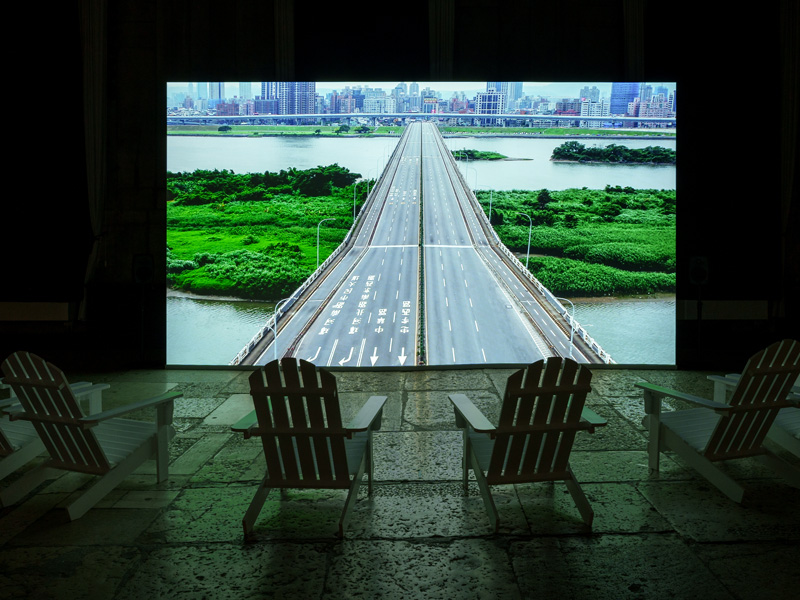
Top image: installation view of Rave into the Future: Art in Motion, October 24, 2025–January 12, 2026. Photograph by Kevin Candland, © Asian Art Museum of San Francisco.
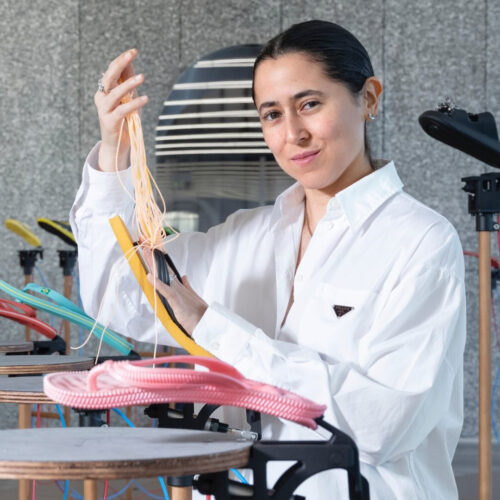
Meriem Bennani was born in 1988 in Rabat, Morocco and currently lives and works in New York City. Using strategies of immersion, duplication, multiplicity, and remix, Bennani blends humor and critique, reaffirming the power of family and home while analyzing larger systems of power across a networked world.
Bay Area-based Iranian-Kurdish artist Morehshin Allahyari‘s work weaves together complex narratives in opposition to the ongoing influence of Western technological colonialism in the context of the Middle East and North Africa.
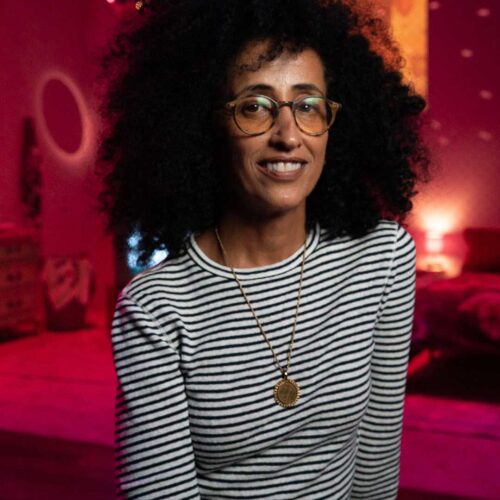
Oakland-based Arab Persian American artist Sahar Khoury (b. 1973, Chicago) lives and works in Oakland. Her art is informed by her background in anthropology and a deep interest in structural vulnerability within communities.
Meriem Bennani was born in 1988 in Rabat, Morocco and currently lives and works in New York City. Using strategies of immersion, duplication, multiplicity, and remix, Bennani blends humor and critique, reaffirming the power of family and home while analyzing larger systems of power across a networked world.